At MOM Fetal Scans, prenatal genetic testing and counselling is not about numbers, reports, or results alone it is about guiding families responsibly through some of the most sensitive decisions of pregnancy. As a fetal medicine specialist and obstetrician, I believe genetic evaluation must always be personalised, ethically guided, and supported with clear medical explanations.
Prenatal genetic services play a crucial role in identifying risks, understanding fetal development, and preparing parents for what lies ahead. My responsibility is to ensure that every test, every discussion, and every decision is made with medical integrity, compassion, and respect for parental values, while keeping the wellbeing of both mother and baby at the centre of care.
Prenatal Genetic Counselling
Prenatal genetic counselling is the cornerstone of responsible fetal medicine. At MOM Fetal Scans, counselling begins even before any test is recommended. I take time to understand the pregnancy history, family background, ultrasound findings, and screening results before discussing genetic risks. This step is essential to avoid unnecessary testing and anxiety.
Counselling is not about directing decisions—it is about empowering parents with knowledge. I explain what a potential risk means, what testing options are available, and what each result could imply. Many families feel overwhelmed by medical terminology, and my role is to translate complex genetic information into clear, understandable guidance so parents can make informed choices confidently.
Focus Areas of Genetic Counselling
Understanding inherited and pregnancy-related risks
Explaining screening vs diagnostic testing
Interpreting ultrasound and blood test findings
Emotional support during uncertainty
Ethical, non-directive medical guidance
Prenatal Genetic Testing
Prenatal genetic testing helps assess whether a fetus may be affected by chromosomal or genetic conditions that can impact development, health, or long-term outcomes. At MOM Fetal Scans, testing is never routine or commercial—it is recommended only when clinically appropriate and beneficial to the pregnancy.
Genetic testing may include non-invasive screening tests such as NIPT or diagnostic procedures such as CVS or amniocentesis. Each test has its own purpose, timing, accuracy, and limitations. I ensure that parents understand why a test is suggested, what it can detect, and what it cannot, before proceeding.
Key Aspects of Genetic Testing
Individualised test selection
Appropriate timing during pregnancy
Clear explanation of accuracy and limits
Integration with ultrasound findings
Responsible interpretation of results
Prenatal Diagnosis
Prenatal diagnosis refers to confirmatory testing performed when screening results or ultrasound findings indicate an increased risk of genetic or chromosomal abnormalities. This stage requires the highest level of medical precision, counselling, and ethical responsibility.
At MOM Fetal Scans, prenatal diagnostic procedures such as chorionic villus sampling (CVS) and amniocentesis are performed only when clearly indicated. As both a DNB Obstetrician and Fetal Medicine specialist, I ensure these procedures are carried out under ultrasound guidance, following strict safety protocols, with careful post-procedure monitoring.
What Prenatal Diagnosis Involves
Identifying when diagnosis is necessary
Safe performance of invasive procedures
Minimising procedural risks
Accurate laboratory correlation
Structured post-test counselling
Fetal Defects Counselling
Receiving news of a fetal anomaly or genetic abnormality can be emotionally overwhelming for families. Fetal defects counselling is one of the most sensitive and important aspects of my practice. My approach is always empathetic, honest, and supportive, ensuring parents are not left confused or isolated.
During counselling, I explain the nature of the condition, how it may affect the baby before and after birth, and what treatment or management options are available. Some conditions may require monitoring, others surgical intervention after birth, and some may involve complex decision-making. Parents are supported throughout, without pressure or judgement.
Counselling for Fetal Conditions Includes
Clear explanation of the diagnosis
Expected outcomes and prognosis
Treatment or intervention options
Pregnancy continuation guidance
Emotional and psychological support
Multidisciplinary Counselling & Collaborative Care
Many prenatal conditions require expertise beyond fetal medicine alone. MOM Fetal Scans follows a multidisciplinary counselling model, ensuring that families receive comprehensive opinions and coordinated care from multiple specialists when required.
This collaborative approach helps parents understand not just the diagnosis, but the full continuum of care—from pregnancy to birth and beyond. Multidisciplinary counselling also supports realistic planning and reduces uncertainty during complex pregnancies.
Our Multidisciplinary Support System
Post-anomaly scan counselling
Perinatal decision-making support
Geneticist consultations
Pediatric surgeon consultations
Neonatologist consultations
Congenital Anomaly Counselling and Follow-Up
When a congenital anomaly is identified, follow-up care becomes essential. Counselling does not end with diagnosis—it continues throughout pregnancy. I closely monitor fetal growth, wellbeing, and progression of the condition while coordinating care with relevant specialists.
Follow-up counselling ensures that parents remain informed at every stage and are prepared for delivery planning, neonatal care, and any postnatal interventions that may be required.
Ongoing Care Includes
Regular ultrasound monitoring
Progress assessment of anomalies
Delivery and birth planning
Neonatal care preparation
Long-term guidance and support
Ethical and Legal Responsibility in Genetic Care
Genetic testing involves sensitive information, and ethical practice is non-negotiable. At MOM Fetal Scans, all prenatal genetic services strictly comply with national laws and international medical guidelines, including full adherence to the PCPNDT Act.
Beyond legal compliance, ethical care means recommending tests only when medically justified, maintaining confidentiality, and ensuring that parents feel respected and supported throughout the process.
Our Ethical Commitments
Informed consent at every stage
Strict legal compliance
Confidential handling of data
No unnecessary testing
Respect for parental decisions
Why Choose MOM Fetal Scans for Prenatal Genetic Care in OMR
MOM Fetal Scans is built on the principle that genetic medicine must be led by experience, not technology alone. Every consultation, test recommendation, and report review is personally handled by me, ensuring continuity and trust.
Parents choose MOM Fetal Scans because we combine clinical expertise, advanced imaging, ethical practice, and compassionate counselling—all under one roof.
What Sets Us Apart
Consultant-led fetal medicine care
Integrated ultrasound and genetics
Transparent counselling
Multidisciplinary collaboration
Trusted care in OMR
Role of Advanced Ultrasound in Prenatal Genetic Evaluation
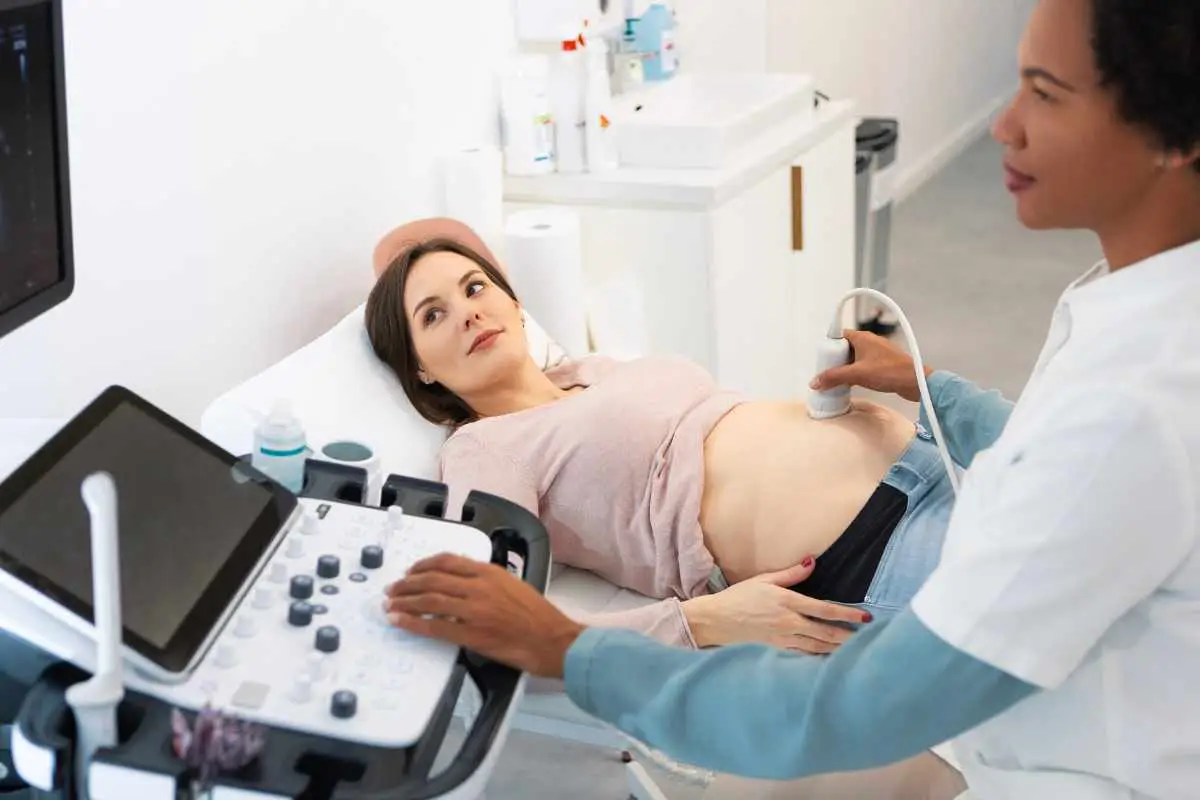
In prenatal genetic care, ultrasound plays a critical role alongside genetic testing. Many genetic and chromosomal conditions first present as structural markers or growth patterns on detailed ultrasound scans. At MOM Fetal Scans, advanced fetal imaging is not used in isolation but as an essential clinical tool to guide genetic risk assessment.
High-resolution ultrasound allows me to evaluate fetal anatomy, growth, placental function, and subtle markers that may indicate an underlying genetic condition. These findings help determine whether genetic testing is required, which test is most appropriate, and how urgently further evaluation should be done. Ultrasound correlation also ensures that genetic results are interpreted accurately and responsibly.
How Ultrasound Supports Genetic Care
Identification of soft markers and anomalies
Correlation with genetic screening results
Guidance for diagnostic testing decisions
Monitoring progression of detected conditions
Holistic assessment of fetal wellbeing
Emotional Support and Psychological Care for Expectant Parents
Genetic testing and prenatal diagnosis can bring emotional stress, anxiety, and uncertainty for expectant parents. As a doctor, I recognise that emotional wellbeing is just as important as medical accuracy. At MOM Fetal Scans, counselling is provided in a calm, supportive, and non-judgmental environment, allowing parents to process information at their own pace.
I take time to listen, acknowledge fears, and address concerns honestly. Whether results are reassuring or complex, parents are never rushed into decisions. Emotional support helps families feel grounded, supported, and capable of making thoughtful choices during challenging moments of pregnancy.
Our Supportive Care Approach
Calm and empathetic consultations
Clear, jargon-free explanations
Time for questions and reflection
Respect for emotional responses
Ongoing reassurance and guidance
Planning Pregnancy, Delivery, and Newborn Care After Genetic Findings
When a genetic condition or congenital anomaly is identified, planning becomes essential. Prenatal genetic care extends beyond diagnosis—it involves preparing families for delivery planning, neonatal care, and long-term outcomes. At MOM Fetal Scans, I guide parents through this process with clarity and realism.
This planning may include decisions about the place and mode of delivery, need for neonatal intensive care, early surgical evaluation, or specialised newborn monitoring. By coordinating care with neonatologists and pediatric specialists, we ensure that families are medically and emotionally prepared for the next stage of their journey.
Care Planning Includes
Delivery planning based on fetal needs
Coordination with neonatal teams
Anticipation of post-birth interventions
Parent education and preparedness
Continuity of care beyond pregnancy
Conclusion – Trusted Prenatal Genetic Testing & Counselling in OMR
At MOM Fetal Scans, prenatal genetic testing and counselling is delivered with clinical precision, ethical responsibility, and compassionate care. My approach is centred on guiding families through complex medical information with clarity, empathy, and respect—ensuring every decision supports the wellbeing of both mother and baby.
With specialist-led counselling, advanced ultrasound integration, and multidisciplinary collaboration, MOM Fetal Scans stands as a trusted centre for prenatal genetic evaluation and fetal care in OMR.
Call to Action:
📞 Consult Dr. Subhashini Ravi at MOM Fetal Scans, OMR, for expert prenatal genetic counselling and personalised pregnancy guidance.
Frequently asked question
Prenatal genetic testing is a set of tests performed during pregnancy to assess the risk of chromosomal or genetic conditions in the developing baby. At MOM Fetal Scans, these tests are recommended only when medically indicated, helping parents make informed decisions while ensuring both maternal and fetal safety.
Screening tests, such as NIPT, indicate the likelihood of a condition, while diagnostic tests, like amniocentesis or CVS, confirm the presence of a genetic abnormality. Both approaches are carefully selected based on risk factors, ultrasound findings, and family history.
Non-invasive tests, like NIPT, are completely safe and carry no risk to the baby. Invasive tests, such as CVS or amniocentesis, are performed under strict ultrasound guidance by a fetal medicine specialist, with minimal risk when conducted properly.
Genetic counselling can be done as early as the first trimester, particularly if there are risk factors like advanced maternal age, abnormal screening results, or a family history of genetic disorders. Early counselling allows for informed planning and timely testing.
If a genetic or structural anomaly is identified, I provide detailed explanations, discuss the range of medical options, and involve a multidisciplinary team including geneticists, neonatologists, and pediatric surgeons. Continuous support and follow-up help families navigate decisions with confidence and clarity.